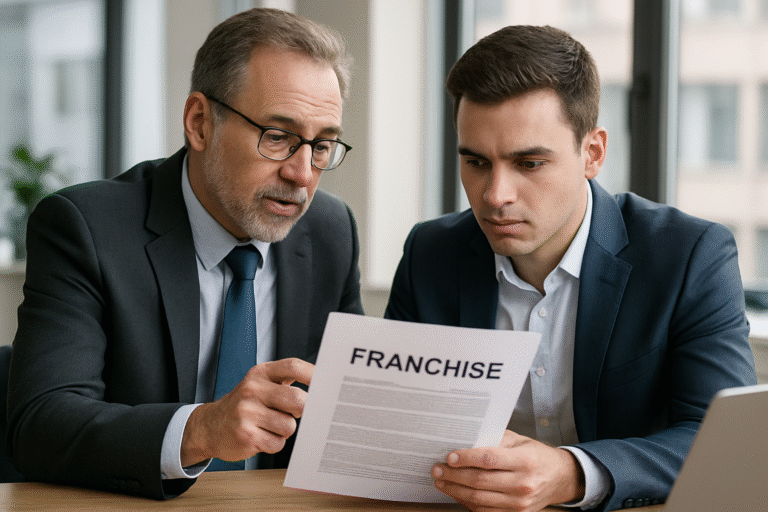

Franchising has long been seen as the domain of mega-corporations with deep pockets and global ambitions. It’s easy to assume that only huge companies can spawn franchise networks while small businesses stay local. Yet across Europe, a different story is unfolding: small and medium-sized enterprises (SMEs) are increasingly powering a franchising boom. In a post-pandemic landscape marked by economic uncertainty, franchising has proven remarkably resilient and accessible, enabling everyday entrepreneurs to scale up without massive capital or corporate backing. Recent statistics show robust growth in franchise sectors throughout Europe – from the UK and France to Spain, Italy and emerging Central European markets – driven by local businesses turning their successful concepts into franchised brands. The message is clear: franchising is not an exclusive club for the giant players; with the right systems, support, and mindset, your SME could be the next big franchise success story.
Franchising Boom: SMEs Driving Growth Across Europe
To appreciate how franchising is within reach for smaller companies, consider the current franchising landscape in Europe. Far from being dominated solely by global chains, national franchise markets are thriving with home-grown networks and SME-driven brands. Here’s a snapshot of franchising’s scale and growth in key European markets (as of 2023):
- France: Europe’s franchising leader, with 2,035 franchise networks and 92,132 franchise outlets, generating €88.5 billion in sales and nearly 951,600 jobs[1]. The French franchise sector grew ~15% in revenue in 2023 alone, far outpacing general economic growth[2] – a testament to franchising’s resilience in an inflationary post-pandemic economy.
- United Kingdom: A record 1,009 franchise systems operate in the UK, a rise of 8% since 2018, with 50,421 franchise units employing 770,000 people[3]. The sector contributes £19.1 billion to the UK economy (up 12% since 2018)[4]. Notably, 89% of UK franchised units are profitable, and among franchises over five years old, 60% report being “quite or highly profitable”[5] – reflecting the robust health of franchised SMEs even through Brexit and COVID-19 challenges.
- Germany: Europe’s largest economy boasts roughly 910 franchise systems and 190,000 franchise outlets, with the franchise sector’s turnover exceeding €147 billion (+2.3% year-on-year) and 830,000 jobs created[6][7]. Germany’s franchise industry is highly diversified (48% of franchises are in services, 19% in retail, 19% in food/hospitality)[8], showing that franchising extends well beyond fast food into all corners of the SME economy.
- Spain: The Spanish franchise sector comprises 1,384 franchise chains with 78,255 establishments, producing €27.6 billion in turnover (about 1.9% of GDP) and 318,000 jobs[9][10]. Even after the pandemic, Spain saw growth in all franchising indicators in 2023 – more networks, more outlets, higher revenue, and rising employment[11][12] – underscoring franchising’s role as a driver of entrepreneurship and jobs.
- Italy: Franchising in Italy is on a solid growth trajectory. In 2023, Italy neared €34 billion in franchise sales (up 9.9%) with 65,806 franchised points of sale and 287,767 employees in franchising[13]. Interestingly, the number of franchise outlets grew 7.6% in 2023 while the count of franchise brands slightly decreased as the market consolidates around strong concepts[14][15] – a sign that even smaller Italian firms are scaling up successfully, provided they have efficient management and a solid model.
- Central & Eastern Europe (CEE): Emerging European markets are rapidly embracing franchising. For example, Poland now hosts 1,350 franchise networks and ~87,000 franchisee-operated units, with over 500,000 people involved in franchising[16]. Remarkably, 80–86% of Poland’s franchise brands are home-grown SMEs[17], not imports – a stark reminder that local entrepreneurs are using franchising as a fast-growing path for expansion. Other CEE countries like Romania, the Czech Republic, and Hungary similarly report dozens or hundreds of domestic franchise concepts, from retail and food to services. Franchising is truly not just a Western European phenomenon; it’s a pan-European growth engine fueled by businesses of all sizes.
What do these numbers tell us? First, franchising is booming across Europe, even in the face of economic headwinds. Second, SMEs are at the heart of this boom. In each country, many – if not most – franchise networks began as small businesses that figured out how to replicate their success. Franchising has become “one of the fastest growing options for small, private firms”[17], a trend visible from the mature markets of France and the UK to the up-and-coming markets in Central Europe. The scale may differ, but the narrative is consistent: franchising is a scalable model accessible to ordinary business owners, not an exclusive plaything for corporate giants.
Busting the Myth: You Don’t Need to Be a Giant to Franchise
It’s time to bust the myth that only huge companies can franchise. In reality, franchising is often the very mechanism by which small companies become huge. Every big franchise brand started somewhere – usually as a single location or a small regional business run by an ambitious founder. The franchising model enabled those founders to grow beyond the limits of their own capital and time. Think of household European brands that grew via franchising: for example, The Body Shop began as one shop in Brighton in 1976 and expanded globally by franchising its ethical cosmetics stores; Benetton was a small family-run knitwear shop in Italy in the 1960s and scaled to thousands of outlets worldwide through a franchised distribution network. These iconic names didn’t start as giants – franchising helped make them giants.
More importantly, thousands of less-famous SMEs have successfully franchised. From independent cafés, bakeries and gyms to local service providers, countless entrepreneurs have used franchising to scale up in their home country or even internationally. In France, which now leads Europe in franchise outlets, the federation notes “exponential growth in the number of franchise networks across ever more diversified sectors”[18] – a clear sign that everyday businesses (from fast-casual eateries to home improvement services) are adopting the model. In Poland, 86% of franchise brands are local and not foreign imports[19], underscoring that domestic small businesses are driving the sector’s expansion. And in the UK, the British Franchise Association (BFA) has welcomed its 2,000th franchisee member, many of whom joined networks that started as owner-operated SMEs just a few years prior[20].
Why is franchising attractive to smaller companies? Because it allows rapid expansion without the need for massive capital or a huge corporate staff. Instead of investing millions to open branches in new cities, a small business can partner with independent owner-operators (franchisees) who invest their own capital to launch new locations. The franchisor (original business owner) provides the brand, know-how, and ongoing support, while franchisees do the heavy lifting of opening and operating each location. This partnership model lets a business grow far faster than it could by opening only company-run outlets. For example, a boutique fitness studio that perfected its concept in one city can franchise to entrepreneurs in other cities who are passionate about fitness – soon there are dozens of studios nation-wide, all following the original playbook. A family-owned gelato shop in Italy can franchise its model to franchisees in tourist towns across Europe, spreading the brand far and wide without the family having to finance each new shop themselves.
Equally important, franchising is not about the size of your company today – it’s about the strength of your concept and systems. Successful franchisors come in all sizes, but they share common traits: a distinctive brand, a proven business model, and operational systems that can be taught and replicated. If your SME has these elements in place (or you’re willing to develop them), you’re already closer to franchising than you might think. You don’t need a Fortune-500 budget; you need a concept that can be cloned, plus the dedication to build a supportive network around it. As we’ll explore, franchising is fundamentally about systems, processes, and consistency – not about having endless capital. In fact, many would-be franchisors discover that the mindset shift from “running my business” to “systematizing my business for others to run” is the biggest leap – not the money.
How Small Businesses Become Franchise Success Stories
To inspire your journey, let’s highlight how ordinary SMEs have transformed into thriving franchise networks. Across various industries, there are “everyday” business success stories that prove franchising’s accessibility:
- Cafés & Bakeries: European towns abound with charming local cafés that blossomed into franchise chains. One example is Le Pain Quotidien, a Brussels bakery-café started by a single artisan baker in 1990, which franchised its rustic communal-table concept and now has over 200 locations worldwide. Similarly, Fornetti, a small Hungarian bakery founded in 1997, began franchising its take-away pastry shops; within a decade it had hundreds of franchise outlets across Central Europe, illustrating how a simple food concept can scale rapidly via franchise partners. These businesses started as tiny shops and grew into international names by focusing on replicable menus, consistent quality, and a brand vibe that could travel – all key franchising ingredients.
- Fitness Studios: The fitness sector shows that you don’t need a huge gym empire to franchise – niche concepts can thrive. For instance, Mrs. Sporty, a women’s fitness micro-gym concept, started in Germany and used franchising to expand to over 500 clubs across Europe. Its founders (including former tennis star Stefanie Graf) were not global gym tycoons; they were entrepreneurs with a focused idea (circuit training for women) and a system that could be easily taught to franchisees. By providing a standardized training program and strong community branding, they enabled many first-time business owners to open Mrs. Sporty franchises in their own towns, benefiting both the local owners and the brand’s footprint. Boutique fitness franchises – from yoga studios to EMS (electro-muscle stimulation) training centers – are proliferating across Europe, mostly launched by small teams who created a concept and scaled via franchising.
- Beauty & Wellness Clinics: Consider the rise of franchises in beauty, cosmetics, and wellness services. Blo Blow Dry Bar, for example, was a single hair salon concept (founded by two women in Canada) that franchised its affordable luxury blow-dry service; it now has multiple locations in the UK and Europe, run by franchisees tapping into a well-defined beauty process. In France, Yves Rocher (a botanical beauty brand) grew from a small Breton family business to an international franchise network of beauty stores and spas. Local spa clinics, massage studios, nail salons, and cosmetic treatment centers are increasingly franchising their operations – not by being big corporations, but by creating consistent service protocols and a strong brand ethos that other entrepreneurs can adopt. The success of these concepts often lies in turning personal expertise (say, a unique skincare method or spa atmosphere) into documented procedures and a recognizable brand – which then attracts franchise investors who want to replicate that success in new locations.
- Services & B2B: Franchising isn’t limited to consumer-facing businesses; many service SMEs have scaled up this way. Home cleaning, children’s education, senior care, real estate agencies, consulting services – if it’s a business with a repeatable model, it can likely be franchised. For example, Mail Boxes Etc., originally an American shipping/printing service, entered Europe and thrived by franchising to local operators; today Italy is one of its largest markets with hundreds of franchise centers[21]. On a smaller scale, independent consultancy firms or B2B service providers sometimes franchise their business model to expand regionally while keeping a local touch in each market. If you’ve developed a proven method to deliver a service profitably, there may be others in different cities or countries who would pay to operate under your brand and system – that’s the essence of franchising.
These stories underline a crucial point: the gap between a single successful business and a franchise network is often just a strategic jump – not an unbridgeable chasm. The café owner, gym trainer, or beautician likely started with one location and no intention of franchising. Over time, perhaps demand grew beyond their capacity, or customers from other cities inquired how to bring the concept to their area. With the right guidance, these owners realized that franchising offered a path to scale up sustainably: by sharing their blueprint with franchise partners rather than trying to do it all themselves. They invested in codifying their processes, building a brand identity, and creating training programs – then welcomed franchisees on board. In each case, the business didn’t need to be “big” to start franchising; franchising is what made it big.
If your company has a solid offering that people love, you too might be fielding questions like “When are you opening on the other side of town?” or “Could I open a branch of this in my city?”. Those are clues that franchising could be your next step. The myth that franchising is only for huge corporations is outdated – thousands of European SMEs have shattered that myth by franchising their way to growth. In the next sections, we’ll demystify how franchising works and what it takes to prepare your business for this journey.
The Franchise Edge: Systems, Support, and Success Rates
Why do franchises often outperform independent startups? The answer boils down to systems and support – the twin pillars of the franchise model. Franchising is sometimes described as “being in business for yourself, but not by yourself.” When an SME becomes a franchisor, it essentially packages its successful way of doing business into a proven system – complete with operating manuals, training programs, supplier relationships, and a marketing playbook – and then shares that system with franchisees. In return for franchise fees and royalties, the franchisees get a turnkey business model and ongoing support, greatly increasing their odds of success compared to starting from scratch. The franchisor–franchisee relationship is built on the idea that brand consistency + local ownership = a powerful combination.
Consider the success rate statistics: While roughly 50% of independent startups fail within their first 3 years, franchises have a commercial failure rate of around 0.5% in that same timeframe[22]. In the UK, an Experian analysis found that over one-third of non-franchised startups go under by year two and half by year three, whereas the 2024 BFA survey showed the franchise failure rate fell from an already low 0.9% to just 0.5%[22]. In other words, 99.5% of franchises were still trading after 3 years, a staggering contrast to the coin-flip survival odds of independent ventures. Likewise, an elite franchise survey in 2024 noted “an incredible 99.5% of franchises succeed” versus high failure rates for startups[23]. This isn’t magic or luck at play – it’s the structural advantages of franchising:
- Tried-and-Tested Model: A franchise is typically built on an operation that has been refined and proven profitable by the founder. Franchisees inherit that experience curve. They aren’t experimenting with an unproven idea; they’re implementing a model that already works. As one report put it, “franchises are built on tried and tested operating models… combine that with the expertise and support from the franchisor, and it helps explain why franchisees are perfectly positioned for success”[24]. The standardization of best practices reduces the rookie mistakes that often sink new businesses.
- Comprehensive Training & SOPs: Good franchisors provide initial and ongoing training, turning novice operators into capable business owners. They also supply Standard Operating Procedures (SOPs) and manuals for everything from customer service to inventory management. This means a franchisee doesn’t need to reinvent the wheel or have industry experience – they follow a clear roadmap. For the franchisor (you, the SME owner), developing these process documents and training systems is a one-time effort that pays dividends in scalability. Essentially, your business know-how gets institutionalized, so it can be replicated with consistency.
- Brand Recognition and Marketing Support: Under a franchise, many locations share one brand – amplifying its reach. A strong brand gives an instant boost to new units (customers trust a known name), and franchisees benefit from marketing campaigns they could never afford alone. Franchisors often coordinate national or regional advertising, digital marketing, and promotional strategies that individual small businesses wouldn’t manage on their own. For example, in Europe today, social media and digital marketing are indispensable in driving consumer traffic, and franchise networks leverage their scale: recent surveys show that 50% of European consumers cite social media ads as a top influence on purchases, just ahead of email marketing (48%)[25]. A franchisor can run professional multi-channel campaigns and provide franchisees with ready-made social media content, SEO-optimized web pages, and more – giving them a digital edge that independent peers lack. In short, a franchise network pools resources to build a bigger brand footprint (both online and offline) than any standalone small business could.
- Ongoing Business Support: The franchisor’s role doesn’t stop at signing the contract – in fact, it begins there. Successful franchisors act as mentors and co-pilots to their franchisees, providing operational support, coaching, and innovation. This might include field support visits, group conferences for franchisees, helpline assistance, and continuous R&D (updating the business model with new products or technology). Many SMEs struggle to keep up with trends (like adopting new digital tools, or responding to market shifts), but franchisees have a support system to guide them. For instance, franchise networks are rapidly adopting new tech – from AI-driven marketing tools to cloud-based scheduling systems – and rolling these out network-wide[26]. An independent business might lag in such improvements, whereas franchisees benefit from upgrades and best practices sourced by the franchisor. This keeps each unit more competitive and resilient.
- Peer Network and Shared Learning: In franchising, you’re never alone. Each franchisee is plugged into a network of peers operating the same concept. They can exchange tips, warn each other of pitfalls, and motivate one another. This network effect often means problems get solved faster (someone somewhere has seen it before), and successes can be replicated across locations. For an SME franchisor, fostering this community can greatly strengthen the entire brand. Your franchisees become a team – one that shares your goal of growing the brand and can provide feedback and innovation from the ground. Compare this to a standalone small business owner who might have no one to turn to when challenges arise.
Put simply, franchising replaces the uncertainty of a solo startup with the predictability of a system. It’s a classic case of strength in numbers and process over improvisation. None of this implies franchising is easy or guaranteed – franchise businesses can and do fail if the concept or execution is flawed. But the odds and data clearly favor the franchise model’s ability to weather storms. During the COVID-19 pandemic, for example, many independent SMEs sadly had to shut down, while franchise networks pivoted and survived at higher rates – thanks to collective problem-solving and franchisor guidance (e.g. switching to delivery models, bulk negotiating rent relief, etc.). Indeed, 66% of UK franchisors reported trading better than pre-pandemic levels by 2023[5], highlighting how quickly franchises rebounded. In France, the franchise sector actually grew strongly through the pandemic recovery, with total franchised sales up 15.5% in 2023[27].
For a prospective franchisor (like you), the lesson is: focus on building great systems and support structures – size will follow. You don’t need dozens of outlets now; you need one solid prototype and a playbook to clone it. The franchise edge is real – and it’s rooted in the very qualities that SMEs can excel at: nimbleness, standardization, and customer-centric improvements. In the next section, we’ll walk through how to get your business “franchise-ready” by developing those systems and supports.
Preparing Your Business to Franchise: A Step-by-Step Roadmap
So you’re intrigued by the idea of franchising your business – how do you actually do it? Franchising is a structured process, and preparing properly will set you and your future franchisees up for success. Here is a step-by-step roadmap to get an SME ready for franchising, along with practical tips to make the journey smoother:
1. Conduct a Scalability Self-Assessment: Start by evaluating if your business is truly franchisable. Not every business is a fit for franchising – you need a concept that can be replicated profitably in multiple locations without your direct daily presence. Ask yourself: Is there consistent demand for my product/service in other cities or regions? Do we have positive unit economics (i.e. each location yields a healthy profit margin that would also appeal to a franchisee after fees)? Is our method of operation teachable to someone else? Are our results repeatable, or are they heavily dependent on one person (you)? If your business relies solely on your personal skill (say you’re an artist whose unique creations drive sales), franchising might not work; but if you have established processes and a brand that customers seek out, you likely have a scalable model. Checklist – Is Your SME Scalable?: Unique selling proposition, profitable financial model, strong customer demand, operations that can be systematized, and preferably some track record beyond a single location (if you have two or three units running successfully, even better as proof of concept).
2. Streamline and Document Your Operations: A franchise runs on paper (or its digital equivalent). That means creating Standard Operating Procedures manuals (SOPs) and documentation for every aspect of the business – recipes, service protocols, staff training guides, customer service scripts, IT systems, marketing guidelines, etc. Essentially, you want to capture the “secret sauce” of what makes your business successful so it can be consistently replicated. This can be the most labor-intensive part of preparation, but it’s absolutely vital. Think of it this way: if you were opening a second company-owned unit, you’d need to train new staff to run it without you – what would you tell them? Put that in writing. Many businesses start by writing a operations manual and a training manual, which together form the core of the “Franchise Bible” you’ll give to franchisees. If technical, you might need manuals for equipment usage or software as well. Tip: You don’t have to do this alone – you can involve key employees or hire specialists to help write manuals, or use templates from franchise consultants. For example, FMS Europe and similar firms maintain extensive SOP libraries from working with thousands of companies, which can be customized to your business, saving you huge time and ensuring no critical process is overlooked. Leverage such resources to get a professional-grade manual and training program in place faster.
3. Protect Your Brand and Intellectual Property: Before you franchise, shore up your brand identity – it’s one of your most valuable franchise assets. Make sure you have registered trademarks for your brand name, logo, and any unique product names or proprietary technology in your key markets (at least in your home country and potentially EU-wide via an EU trademark). A franchise is fundamentally a license of your brand and system, so you must be able to grant franchisees the right to use protected IP. It’s also wise to register domain names and social media handles for your brand in other countries if you anticipate expanding there. Aside from legal protection, standardize your brand visuals and messaging: create a brand style guide that covers logo usage, store design or decor guidelines, brand voice in communications, etc. Franchisees will be expected to maintain brand consistency, so you need to define what that looks like. This stage is also a good time to refine any elements of your concept that are still rough – e.g., if your menu or service offering is too broad, consider narrowing to a core that’s easier to replicate; if pricing is ad-hoc, set a standard pricing strategy; if supplier quality varies, lock down preferred suppliers. Simplify and package your business format neatly, ready to present to franchise partners.
4. Pilot Test (if possible): While not strictly required, having a pilot or prototype franchise unit (beyond your original unit) greatly strengthens your franchise proposition. Some countries (like Italy and France) even have laws or industry codes recommending that you operate a pilot location for a certain time before franchising. If you currently have only one outlet, you might consider opening a second company-owned location or a “friends and family” franchised location to test if your systems work without you. This pilot can reveal snags in your manuals or training when someone else runs the business. It also provides a demonstration unit you can show to prospective franchisees as proof that the concept works in multiple places. In the UK, for example, franchisors often establish at least one pilot franchise before full rollout (though it’s not mandatory). Realistically, many scrappy SMEs do go straight from one unit to franchising, but they mitigate risk by thoroughly testing their processes internally first. Key principle: Do not franchise an unproven concept – ensure you have ironed out the kinks on your own dime before asking others to invest.
5. Craft a Solid Franchise Business Plan: Franchising is as much about your growth as it is about your franchisees’. Develop a business plan for your franchise expansion: What is your vision for the next 5 years in terms of number of units and markets? How will you attract franchisees, and what profile of franchisee are you targeting (e.g. owner-operators, investors, multi-unit operators)? How will you finance your franchise development – yes, franchising requires less capital than opening all units yourself, but you’ll still need funds to market the franchise, build a support team, and handle legal costs. Many franchisors charge an upfront franchise fee that can help recoup development costs, but initially you might be investing before those fees flow in. Also plan the fee structure: typical models include an upfront franchise fee (for joining the system), ongoing royalties (e.g. 5-10% of sales), and perhaps marketing fund contributions. These fees must be high enough to support your franchisor operations but low enough to leave the franchisee a good profit. To get this right, do financial modeling: project the P&L of a typical franchise unit with the fees, ensuring it remains an attractive ROI for the franchisee (many will expect to recoup their initial investment in 2-4 years). Also project your own revenue from royalties at different scale points to ensure franchising is financially worthwhile for you. Tip: Consult with franchise financial experts or use benchmarks from similar franchises – for instance, knowing that the average turnover per franchise unit in the UK is £400,000[28], or what typical profit margins in your industry are, will help in planning. A well-thought-out plan will also be part of your pitch to potential franchisees (and to banks, if they finance franchisees).
6. Prepare Legal Documents and Compliance: Franchising carries legal obligations. You will need a franchise agreement – a comprehensive legal contract between you (franchisor) and your franchisees. This document sets out all the terms: territory granted, length of term, fees, duties of both parties, training and support provided, use of trademarks, quality control standards, renewal rights, termination clauses, etc. It’s essential to get this drafted by an experienced franchise attorney familiar with your target markets. Many countries in Europe have specific franchise laws or at least general commercial laws that impact franchise agreements. For instance, France requires a disclosure document (the “Document d’Information Précontractuelle”) to be given to prospects 20 days before signing, detailing key info about the franchise network. Italy has a law requiring franchisors to have operated a pilot for one year and to disclose certain data to franchisees. Spain mandates franchisors register with a national franchise registry and provide disclosure on request. Belgium and Sweden have pre-sale disclosure laws, and Germany largely relies on case law and fair trading principles (no specific franchise act, but strong consumer protection norms). You don’t have to become an expert in each country’s law, but you do need to ensure your franchise documentation and practices comply wherever you recruit franchisees. A good strategy is to first create a master “international” franchise agreement template with a lawyer, then localize it as needed (e.g., translate to local language and tweak clauses for local law) when you enter a new country. Also consider things like: Will you give franchisees exclusive territories? What are the performance criteria? How will you handle supply of products (will you or approved suppliers sell goods to franchisees, and at what terms)? Getting the legal framework right from the start prevents huge headaches later. Pro tip: Consult firms that specialize in franchise law or full-service franchise development (such as FMS Europe’s legal team or similar consultants), as they often have ready frameworks for franchise agreements and disclosure documents that meet European standards, speeding up this step.
7. Build Your Franchise Support Team and Infrastructure: Franchising means you are moving from being just an operator to also being a coach and manager of franchisees. You’ll need to allocate resources (and eventually staff) to support your franchise network. Early on, this might be just you and maybe a couple of key employees who wear multiple hats – but outline how support will work. Who will conduct training for new franchisees (and where – at your location, at theirs, or online)? Who will handle franchise sales inquiries and recruit new franchisees (often the franchisor initially, but you might hire a franchise development manager as you grow)? How will you provide field support – e.g., will someone visit each franchisee periodically to check standards and help with issues? As the network grows, you might set up departments for operations support, marketing support, etc., but initially ensure that support processes are defined. Technology can help: consider investing in a simple intranet or franchise management software where you can share updates, training modules, operations data, etc. Many affordable cloud platforms exist for franchisor needs (covering communication, e-learning, KPI tracking, etc.). Setting these up from the get-go signals professionalism. Given that multi-unit ownership and tech adoption are rising trends[26], even a small franchisor should leverage digital tools to manage the network efficiently. For instance, providing franchisees with a CRM system or an online ordering platform can add value to your franchise offering. In summary, be prepared to support franchisees as your clients – their success is your success, so plan to dedicate time to them beyond what you spend on your own unit.
8. Market Your Franchise Opportunity and Screen Franchisees: “If you build it, they will come” does not automatically apply to finding franchisees. You need a strategy to attract and recruit the right franchise partners. Begin with marketing basics: create a prospectus or brochure about your franchise opportunity, highlighting the concept, market potential, support provided, and investment required. Set up a section on your website for “Franchise Opportunities” with a form for inquiries. Utilize franchise portals (there are many online platforms in Europe for advertising franchises for sale), attend franchise exhibitions or trade shows in your region, and network through business organizations. The message you want to convey is that your SME has a compelling, proven concept that is ready to scale, and that you’re looking for passionate partners to share in the growth. Emphasize any unique selling points – e.g., “first to market” concept, high ROI, low initial investment, strong support system (especially if you have a multi-disciplinary team like FMS Europe backing you, mention that expertise). Also be sure to indicate what kind of franchisee you seek: is it owner-operators who will run the business day-to-day? Is it area developers who might open multiple units? Are industry experience or certain qualifications required? Clarifying this helps attract suitable candidates.
Once inquiries come, have a screening and selection process. Remember, not every eager applicant will make a good franchisee. Define criteria (financial capability, business experience, personal motivation, values alignment with your brand, etc.). It’s wise to conduct interviews and perhaps an evaluation form. Many franchisors have prospective franchisees spend a “discovery day” at the business to get mutual feel. Be selective – a bad franchisee (one who doesn’t follow the system or lacks commitment) can damage your brand’s reputation locally. As a new franchisor, you might feel pressure to sign up anyone willing, but it pays to be patient and choose the right pioneers who will validate your model. As the German Franchise Association notes in their guidelines, finding the right partners is crucial and franchisors must devote time to developing mutual confidence with candidates[29][30]. You want franchisees who not only have money, but who believe in your concept and will be dedicated brand ambassadors.
9. Prepare to Localize for Different Markets: If your ambitions include cross-border franchising (say expanding from your home country to other European markets), plan for how you’ll adapt. While the core model should remain consistent, you may need cultural or operational adjustments in new markets. This can include translating all documentation and marketing materials, tweaking product offerings to local tastes or regulations (for example, a food franchise might adjust its menu for local ingredients or dietary preferences), and understanding local consumer behavior. Europe’s diversity is both an opportunity and a challenge – cultural diversity and multi-country laws require flexibility. For example, marketing that works in the UK might need a different angle in Germany; the regulatory environment for, say, health & safety or labor can vary by country and affect franchise operations. Do your research or consult local experts. Often, new franchisors start domestically and expand internationally once stable – at that point, consider finding a master franchisee or area developer in the target country who knows the market. They can help localize and grow the brand regionally. Also join national franchise associations (British Franchise Association, Franchise Federation France, etc.) and the European Franchise Federation, as these bodies provide resources on legal compliance and networking opportunities across borders[31]. In short, think globally but act locally: maintain your brand’s core, but be ready to accommodate Europe’s patchwork of languages and consumer preferences. This adaptability often marks the difference between franchises that thrive across Europe versus those that stumble by imposing a one-size-fits-all approach.
Following this roadmap, many SME owners find that franchising is less intimidating step-by-step. It is a lot of preparation, but keep in mind, much of this groundwork (manuals, legal contracts, branding elements) only needs to be created once and then you leverage it across potentially dozens of franchise units. Also, help is available: franchise development consultancies like FMS Europe specialize in guiding businesses through these exact steps, making the process faster and more cost-effective. For example, FMS Europe’s large multi-disciplinary team (spanning operations, finance, marketing, digital, legal, etc.) can handle or assist with each phase – from writing your manuals and defining financial models to navigating legal compliance in each European market – effectively acting as an extension of your team. This allows you to focus on the strategic vision while experts sweat the details. Indeed, thanks to its depth of expertise and infrastructure, an experienced franchise consultancy can often turn projects around quickly, compressing what might be a year-long DIY development process into a few intensive months. Engaging such support is itself a step that can accelerate your path to franchising success.
Comparing Growth Models: Franchising vs. Other Expansion Strategies
Franchising is a powerful growth model, but it’s not the only path for scaling an SME. It’s important to understand how franchising stacks up against other expansion strategies – such as licensing, partnerships, digital expansion, or opening corporate branches – and when each might be most suitable, especially in a European context. Below is a comparison of key growth models and their pros/cons for SMEs:
- Organic Growth (Corporate-Owned Expansion): This is the traditional route of growing by opening more company-owned locations or branches, funded and managed by your business. When it works best: If you have ample capital, desire full control over each unit, and perhaps when tight control over brand execution is critical (e.g., high-end luxury brands often own their flagship stores). Advantages: You keep all the profits from new units and maintain consistent operations since it’s your team running them. Drawbacks: Capital intensive and slower – you must finance each new location, and your management bandwidth can stretch thin. Opening 5 new outlets on your own might take years and significant debt/equity investment, whereas franchising those 5 could happen faster with franchisee capital. In Europe, another challenge of organic growth is local market knowledge – when expanding to a new country or region, a corporate expansion must build local expertise from scratch, whereas a franchise can leverage a local partner’s knowledge. Use organic growth if you have strategic reasons to own certain locations (e.g., initial stores in a new country to establish presence or because franchising is not yet viable there), but many SMEs realize they cannot achieve widespread presence across 5-10 countries with corporate growth alone.
- Franchising (Owner-Operator Partners): When it works best: You have a replicable format and want rapid expansion with lower financial risk, and you’re willing to invest in training and supporting partners. As we’ve discussed, franchising shines when local entrepreneurship and brand standards converge. Advantages: Fast growth using franchisees’ capital and local drive; franchisees often outperform hired managers because they have skin in the game; less overhead for the franchisor compared to running all units; easier entry into diverse markets since franchisees handle local setup. Drawbacks: Requires letting go of some direct control – you can enforce brand standards but franchisees are independent businesses. There’s also the upfront cost of setting up the franchise system and the ongoing effort to support it (which we addressed in the roadmap). In Europe’s context, franchising is excellent for navigating cultural differences – a local franchisee in Spain will inherently understand Spanish consumer behavior better than a foreign head office might, for example – but it does introduce complexity of managing many independent operators. Overall, franchising is ideal for consumer-facing businesses that benefit from local owner passion (restaurants, retail, services), and it’s increasingly used in B2B as well.
- Licensing: Often confused with franchising, licensing is a looser form of expansion where you permit another company to use some aspect of your business (usually intellectual property like a brand name, product formula, or technology) in exchange for royalties or fees, but without the full franchise system or tight operational control. When it works best: When your business’s value lies primarily in IP or products rather than an entire business format. For example, a small brewery might license its beer recipes and brand to a larger brewer in another country, instead of franchising a brewpub concept. Or a software SME might license its technology to resellers. Advantages: Lower commitment – you don’t have to train or support licensees to the extent of franchisees; lower cost to implement (no need for detailed operations manuals or ongoing oversight). Drawbacks: Far less control over how your brand or product is used, which can risk quality dilution. Also potentially lower revenue: licensing fees are often smaller than franchise royalties since licensees don’t get full support. According to franchise attorneys, franchising typically yields more predictable revenue through structured fees, while licensing has lower upfront cost and complexity[32][33]. In Europe, licensing can sometimes be a way to expand into markets with heavy franchise regulation without triggering those laws – but be cautious, as some “license” arrangements might legally be deemed franchises if they involve significant control or assistance (the line can be thin). Use licensing if you only want to monetize IP and not build a whole network or if the partners are sophisticated businesses that don’t require your support.
- Joint Ventures and Partnerships: This involves partnering with another company or investor to co-own and develop new locations or a new market. In an international context, an SME might do a joint venture with a local company in a target country – each contributing resources and sharing ownership of the outlets in that market. When it works best: When entering a market that is very challenging to crack alone (due to high investment, regulatory barriers, or need for local clout) or when you find a strategic partner whose capabilities complement yours. For instance, a food franchise might JV with a large hospitality company in Europe to leverage their real estate and management resources. Advantages: Risks and investment are shared; you gain a partner’s expertise (e.g., their distribution network, knowledge of local regulations, etc.). Drawbacks: Joint ventures can be complex to manage – you effectively have a “marriage” with another entity and potential for disputes over direction. It’s slower than franchising in terms of scaling because each deal is bespoke. Also, profit is shared, so your upside is lower per unit than franchising (where you typically keep fees without sharing ownership). In Europe, we see JV or area developer deals often for country expansion – for example, an American franchisor might give an experienced European company the development rights for a country in exchange for investment. For an SME franchisor, you might use this approach selectively: perhaps franchise domestically, but if expanding to, say, the Middle East or Asia, partner with a bigger firm for that region (as FMS Europe has done, establishing presence in Vietnam and Atlanta to facilitate global reach). Summary: Partnerships are useful for strategic leaps, but they don’t offer the uniform replicability of franchising.
- Digital Expansion (Online Growth): With the rise of e-commerce and digital services, some SMEs focus on scaling via online channels rather than physical locations. This could mean expanding your market by selling products via online stores into new regions, or offering your services virtually through apps or platforms, or leveraging digital marketing to dramatically grow your customer base without new physical outlets. When it works best: If your business model can be delivered online or remotely, or if you can create digital products (like courses, software, etc.) as an extension. Even for brick-and-mortar businesses, a strong digital strategy can amplify growth (e.g., a retail store franchisor might also ship products across Europe via an online shop, building brand awareness in areas without stores yet). Advantages: Lower cost than physical expansion; potential global reach from a single location; complements physical presence (omni-channel). Drawbacks: Not a direct substitute for having local outlets when the service inherently requires local execution (you can’t serve a cup of coffee over the internet!). Also, cross-border e-commerce comes with its own challenges (tax, customs, customer service in multiple languages). Digital growth isn’t an exclusive alternative but rather a parallel strategy – for example, many franchise systems now incorporate digital marketing and even e-commerce into their model (with proper structures to share revenue if online sales overlap with franchise territories).
In the European context, a balanced approach may involve combining strategies. For instance, an SME might first expand through franchising in its home country, then license its brand for a specific product line in another region, or enter a far-flung market via a joint venture, all while strengthening its digital footprint everywhere. There’s no one-size-fits-all; the key is to choose the model that fits your resources and preserves what’s special about your business.
Why franchising often stands out for SMEs is the ability to harness other entrepreneurs for expansion. Europe’s diverse markets reward local insight, and franchising literally recruits local partners invested in success. This often beats having a centralized team try to micromanage dozens of varied markets. However, franchising does require a mindset shift: you become a teacher and supporter, not just an operator. If that appeals to you, the franchise model can be the most scalable and resilient route. If not, perhaps grow slower with corporate units or explore simpler licensing deals. It’s about aligning with your goals and management style.
Navigating Europe: Regulatory and Cultural Considerations
Expanding via franchising in Europe is exciting but also complex. Each European country has its own legal regime, business customs, and cultural nuances. To ensure your franchise expansion goes smoothly, you must navigate these unique challenges of Europe:
Multi-Country Legal Patchwork: Unlike in the U.S., where franchise law is somewhat uniform across states, Europe is not homogenous in legal terms. The EU does not have a single franchise law that covers all member states (franchising falls under national laws, though EU-wide regulations like competition law and commercial agency directives can apply). This means you need to be aware of the legal requirements in each country you enter. A few examples: – Disclosure Laws: France’s Loi Doubin requires franchisors to provide a detailed disclosure document to prospects at least 20 days before contract signing – including info like the franchisor’s financials, existing franchisees, territory specifics, etc. Italy mandates a disclosure document 30 days prior, and Spain has a looser requirement of disclosure upon request (and requires franchisors to register basic info with the government). Belgium also has a pre-contract disclosure law. Non-compliance can lead to contracts being voided or penalties, so work with local counsel to meet these. –
Franchise Agreement Regulations: Some countries enforce certain clauses or restrictions. For instance, in Germany, there’s no specific franchise act, but general contract and competition law mean franchise agreements must be fair; German case law expects franchisors to provide an earnings prospects statement (some financial projection or actuals) to franchisees pre-sale or risk misrepresentation claims. Spain requires franchise agreements to be in writing (as do most places) and to observe the principles of Spain’s retail trade law. Poland currently has no franchise-specific law but is considering legislation; however, Polish Civil Code and the Code of Good Practice (industry self-regulation) outline fair dealing. –
EU Competition Law: The EU’s Vertical Block Exemption Regulation (VBER) sets some boundaries for franchise agreements, especially around exclusivity and pricing. While franchising is generally seen as pro-competitive (it helps SMEs expand), EU law prohibits certain clauses like fixed resale prices (you can’t force franchisees to sell at a fixed price – only recommend pricing) or absolute territorial protection (some passive sales across borders must be allowed). Ensuring your franchise contract doesn’t violate EU competition rules is important if you operate in multiple EU countries. Typically, well-drafted franchise agreements already comply, but it’s good to know the spirit of these rules (e.g., you can grant territories but cannot stop a franchisee from responding to unsolicited orders from outside their territory). –
Local Business Regulations: Each country has layers of regulations that your franchisees will have to follow (employment law, health & safety, data protection (GDPR) etc.), but as franchisor you should guide them. For example, employment laws in France are quite different (and more stringent) than in, say, Poland. If your system dictates certain HR practices (like staffing levels, training hours), ensure they align with local labor laws. GDPR is EU-wide – if your franchise system involves customer data (loyalty programs, CRMs), you and your franchisees must handle data in compliance with GDPR and local data protection authorities. Plan to provide guidance or tools for that (like vetted software that is GDPR-compliant). –
Trademarks and Brand Protection: As mentioned, register trademarks in each region. The EU Intellectual Property Office (EUIPO) allows a single EU trademark covering all member states, which is very useful. But note, non-EU countries in Europe (e.g., UK post-Brexit, Switzerland, Norway) require separate filings. Also watch out for any local brand name issues – sometimes a name might have unwanted meanings in another language, or you might encounter a pre-existing brand with a similar name (which could force a name change in that market). Do a bit of trademark homework before entering a new country, to avoid surprises.
Cultural Diversity and Localization: Europe’s cultural tapestry means a franchise approach that succeeded in one country might need tweaking in another. This isn’t to discourage franchising across borders – far from it, European franchise networks thrive by balancing brand consistency with local adaptation. Key considerations: –
Consumer Preferences: Tastes and habits vary. A menu item hugely popular in the UK might flop in Italy, and vice versa. Successful food franchises often localize 20% of their menu to suit local palates while keeping 80% standard. Retail franchises adjust product mix to local styles. Be prepared to give franchisees some leeway to adapt to their market, within reason. For example, international café franchises introduced region-specific items (like offering churros in Spain, or green tea latte in Austria) to resonate locally while preserving the brand’s essence. Work with your first franchisees in a country to identify if any adaptation is needed – they’ll appreciate that flexibility and insight. –
Language: Operating in the local language is a must. All manuals, training, and marketing materials should ideally be translated. If you don’t have language skills in-house, you’ll need translators or bilingual staff when expanding to new language markets. Additionally, having someone on your team (or a consultant) who can communicate with franchisees in their native language can greatly smooth relationships. (FMS Europe, for instance, being based in Slovakia with an international team, emphasizes local language capabilities along with global experience – this kind of setup can bridge cultural gaps effectively). –
Marketing and Branding Across Borders: What’s an effective marketing message in one culture might not hit the mark in another. Advertising images, slogans, even colors can carry different connotations. For example, humor in advertising is very country-specific; a campaign that’s edgy in one country might be offensive in another. When franchisees handle local marketing, they’ll know what works for their audience – as franchisor, you should provide core branding and maybe campaigns, but also allow and encourage local marketing initiatives. Ensure the brand guidelines are clear on what can be localized vs. what must remain consistent (perhaps logo use is fixed, but each country can run its own promotions tied to local holidays, etc.). Also consider multi-country campaigns – if you reach a size, joining efforts like pan-European online marketing or leveraging social media where audiences overlap can be efficient. –
Supply Chain and Logistics: If your franchise involves physical products (food ingredients, retail goods, etc.), plan how supply will work internationally. Shipping from one country to all others can be costly and face customs (if outside EU). Many franchises either find local suppliers in each country (with franchisor approving them to ensure quality) or establish distribution hubs in regions. The EU single market eases movement of goods within the EU, but if you franchise in, say, the UK now (post-Brexit) or other non-EU states, factor in duties and import regulations. Adapting your supply chain strategy per region is part of successful franchising – sometimes it even leads to cost improvements (local sourcing can be cheaper). –
Role of Master Franchisees or Area Developers: In Europe, a common strategy is to use master franchising for new countries. This means you grant an individual or company in the target country the rights to develop and sub-franchise your brand there. They become, in effect, the mini-franchisor locally, handling recruitment, support, and adaptation. This can accelerate growth because the master brings local heft and invests in expansion. However, you relinquish a measure of control and you earn indirectly (you usually split fees with the master). Some European markets – especially large or culturally distinct ones – are well tackled via master franchisees. Many US brands in Europe came via master franchisees in each country, for instance. As an SME, you could consider this once you have a solid home base franchise going. Another route is area developers – someone who agrees to open a certain number of units themselves (no sub-franchising) in a territory. This can work if you find a partner with capacity to open multiple units (common in sectors like food, where an investor might take on an entire city or country). Decide what model fits each situation, and get legal agreements tailored to masters/area deals as needed (they differ from single-unit franchise contracts).
Navigating EU and Local Regulations: Staying compliant doesn’t have to be scary. Use resources available: the European Franchise Federation (EFF) is a great starting point for understanding cross-border franchising issues and connecting with national associations[34]. National franchise associations can often recommend local lawyers or consultants. Also, keep an eye on evolving regulations – e.g., currently Poland is discussing a franchise law; other countries might introduce new disclosure rules as franchising grows. Being a member of associations often keeps you informed (they lobby and update members on legal changes). Additionally, general EU regulations (like consumer protection directives, ecommerce rules, etc.) might impact your franchisees – incorporate guidance on those into your system.
In summary, Europe offers a vast opportunity for franchise expansion, but it demands adaptability. The good news is that plenty of franchisors have navigated this terrain – meaning there’s precedent and support for doing it right. The challenges of multiple languages, laws, and cultures can be overcome by thorough preparation and by leaning on local expertise. Many franchise consultants in Europe (including FMS Europe) pride themselves on local insight paired with global reach – exactly because they know one size doesn’t fit all in Europe. If you do your homework and respect each market’s uniqueness, your SME’s brand can travel far and wide successfully.
Leveraging Expertise: Fast-Tracking Your Franchise Journey
As you contemplate franchising and all its moving parts, one reassuring fact is that you don’t have to do it alone. Just as franchising itself is about gaining support, the process of becoming a franchisor can be supported by experts who have been through it many times. Partnering with experienced franchise consultants or advisors can dramatically reduce the trial-and-error that often slows down new franchisors. It’s like having an experienced co-pilot when flying into new territory.
What can the right consultancy bring to the table? Let’s use FMS Europe as an illustrative example (being a franchise consultancy with international presence in Atlanta, Bratislava, and Vietnam, and a track record with thousands of franchisors and franchisees). An authority-based consultancy approach means:
- Deep Market Knowledge: A firm that has worked across Europe will know the nuances of each market – from consumer trends to legal compliance. For instance, FMS Europe could advise you on how fitness franchise trends in Germany differ from those in the UK, or what marketing channels work best in Central Europe. This saves you from costly missteps and allows tailored strategies for each target country grounded in data and experience.
- Multi-Disciplinary Team: Instead of you having to hire a lawyer, a trainer, a marketing expert, a digital strategist, etc. separately, a full-service consultancy offers all those competencies under one roof. FMS Europe, for example, has specialists in business strategy, operations, finance modeling, branding, digital marketing, and franchise sales. That means when you develop your franchise program, every aspect from legal contracts to a social media strategy for franchise lead generation can be handled holistically. This is both cost-effective (they’ve done it before, so they work efficiently) and ensures nothing is overlooked (often a pitfall when going DIY).
- Existing Resources and Templates: Perhaps one of the biggest accelerators is tapping into pre-existing resources. Seasoned consultants have template franchise agreements, disclosure document formats, operations manual structures, training program outlines, SOP libraries, and more – refined over many projects. They can provide these as starting points, drastically cutting down development time. For example, writing a 200-page franchise operations manual from scratch might take you months; using an SOP library from similar projects might cut that to weeks, as you’d mainly customize rather than start blank. Likewise, they might have checklists for “Is your business ready to franchise?” or frameworks for “franchisee onboarding processes” that have been market-tested.
- Infrastructure for Quick Scale-Up: If you suddenly sign multiple franchisees, do you have the bandwidth to train and support them all adequately? A larger consultancy can lend support – e.g., help run initial training sessions, set up your franchise management software, even handle franchise marketing campaigns on your behalf – until you build your internal team. This fractional support model means you get the infrastructure of a big franchisor before you are one. It’s like having a franchise department on demand. FMS Europe, with a big team and international offices, emphasizes quick turnaround: they can marshal a project team to, say, produce all your franchise docs and launch a recruitment campaign in parallel, accomplishing in a couple of months what might take a small business a year trying to piece things together.
- Credibility and Network: Aligning with a known consulting firm can also lend credibility when attracting franchisees or investors. Being able to say “our franchise program was developed in partnership with experienced franchise consultants who have worked on XYZ” can reassure potential franchisees that your offer is well thought out and not a fly-by-night idea. Additionally, consultants often have networks of contacts – whether it’s franchise trade shows, franchise broker networks, or investors – that can open doors for your expansion. They might, for example, introduce your concept to a master franchise candidate in a target country or feature your franchise in their materials at events. Those intangible benefits of network and reach are hard to replicate on your own.
Of course, choosing to work with consultants is optional – plenty of SMEs have franchised successfully in-house. But consider the cost-benefit: franchising correctly from the start can be far cheaper than fixing mistakes later (e.g., re-writing a poor franchise contract or rescuing a failing franchisee because training was inadequate). Many entrepreneurs find that the investment in expert help pays off in faster growth and stronger foundations. Essentially, it buys you speed and peace of mind. Given that European markets can be complex, having local insight (say, from FMS Europe’s Bratislava office for EU dynamics, or their Atlanta/Vietnam offices for transatlantic or Asian perspective if you go global) is incredibly valuable to avoid cultural faux pas or legal snafus.
In leveraging expertise, ensure the approach remains your vision front and center. The goal isn’t to have someone take over – it’s to amplify your capabilities. A good consultant works with you, respecting your business’s unique DNA and shaping the franchise model around it (not a generic cookie-cutter). Ultimately, you set the goals (e.g., “I want 20 franchises in five countries in 5 years”) and they help chart the course and navigate.
By fast-tracking the development phase, you as the business owner can spend more time on high-level strategy – perhaps scouting key locations, refining the product, or engaging with your initial franchisees to instill the company culture – rather than drowning in paperwork. That is a smart trade-off many savvy SME owners make to ensure their franchising journey starts on solid footing.
Conclusion: Your Franchise Success Story Awaits
Franchising may have once seemed out of reach – a distant dream for “someday when we’re bigger”. By now, it should be clear that someday could be sooner than you think. Across Europe, small businesses are punching above their weight through franchising, scaling local heroes into international players. The café that started on a quiet street in Barcelona could be Spain’s next big food franchise. The tech service born in a London flat could have franchise partners in Paris and Berlin a year from now. The opportunity is as vast as your ambition.
Sure, franchising is not an overnight endeavor. It demands an investment in systems, an openness to share your brand, and a commitment to supporting others. But it rewards you by multiplying your impact – both geographically and financially. And you won’t be venturing forth blindly: you have a wealth of precedent, data, and expert support to guide you. The myth that franchising is only for giants has been shattered by the likes of you – determined entrepreneurs who built something great and refused to be limited by their own two hands or one hometown.
In challenging economic times, franchising also offers resilience. It’s a growth strategy that distributes risk and aligns the interests of many entrepreneurs toward a common goal. That’s a powerful formula. Europe’s franchise sector has shown remarkable flexibility and strength even in volatile conditions – as we saw, franchise networks kept growing and thriving through pandemic and inflation waves. Why? Because franchising is fundamentally about collaboration, proven methods, and mutual success. Those principles carry businesses through uncertainty better than any solo effort.
As you stand on the brink of this franchising journey, imagine the possibilities a few years down the line: Your brand recognized in multiple cities or countries. A community of franchise owners all sharing your passion and vision. Customers enjoying your product or service far beyond your original reach. And your business – once an SME – now a formidable network and a valued brand across markets. This isn’t a fantasy; it’s the trajectory many have followed with franchising as the catalyst.
The first step is making that decision to explore the model. The road is mapped out, and partners like FMS Europe are ready to help navigate, but only you can decide to take the leap. Empower yourself with knowledge, surround yourself with expertise, and dare to dream big. Franchising might just be the vehicle that takes your business from Main Street to the mainstream, from local standout to international success.
Your company could be the next big franchise success story — it starts with the decision to explore the model. Every franchise empire begins with a single courageous step. So ask yourself: why not you, and why not now? The doors to franchising are open wider than ever, even for the “little guys”. Step through, and your SME’s story may soon headline the next chapter of Europe’s franchising boom. Your franchise success story awaits – it’s time to make it happen.
[1] [2] [18] [27] Les chiffres de la franchise en france pour 2023
https://www.toute-la-franchise.com/article-2023-franchise-surperforme-attractivite
[3] [4] [5] [22] [24] [28] A thriving sector: Insights from the 2024 National Franchise Survey – Jackson Fire
https://franchise.jacksonfire.co.uk/bfa-franchise-survey-2024/
[6] [26] Germany – Distribution & Sales Channels
https://www.trade.gov/country-commercial-guides/germany-distribution-sales-channels
https://www.taylorwessing.com/-/media/taylor-wessing/files/germany/2024/07/germany—-franchise.pdf
[9] [10] [11] [12] The Spanish Franchise Grows 2.5% in Turnover and 4.8% in Jobs Generated
[13] [14] [15] [21] Franchising in Italy confirms to be healthy also in 2023
https://franchisinginitaly.com/franchising-italy-confirms-to-be-healthy-also-2023/
[16] [17] [34] Poland – Distribution and Sales Channels
https://www.trade.gov/country-commercial-guides/poland-distribution-and-sales-channels
[19] Who Are the Active Players in Europe? – International Franchise …
https://www.franchise.org/2018/05/who-are-the-active-players-in-europe/
[20] Franchise Investor Survey 2023 – What Franchisors Need To Know
https://www.franchiseinfo.co.uk/news/franchise-investor-survey-2023-what-franchisors-need-to-know/
[23] Franchising facts in 2024: 99.5% of franchises succeed while 50% of …
[25] 2023 European Consumer Trends & Attitudes (Report)
[29] [30] [31] Franchising in Europe: the ultimate guide | Global Franchise
https://www.global-franchise.com/insight/europe-franchise-guide
[32] [33] Licensing vs Franchising: Choosing the Best Growth Model for 2025 – Loft Legal
https://loftlegal.com/licensing-vs-franchising-choosing-the-best-growth-model-2025/